NY Times & Jigsaw
Utilizing AI to foster healthy online conversations.
Overview
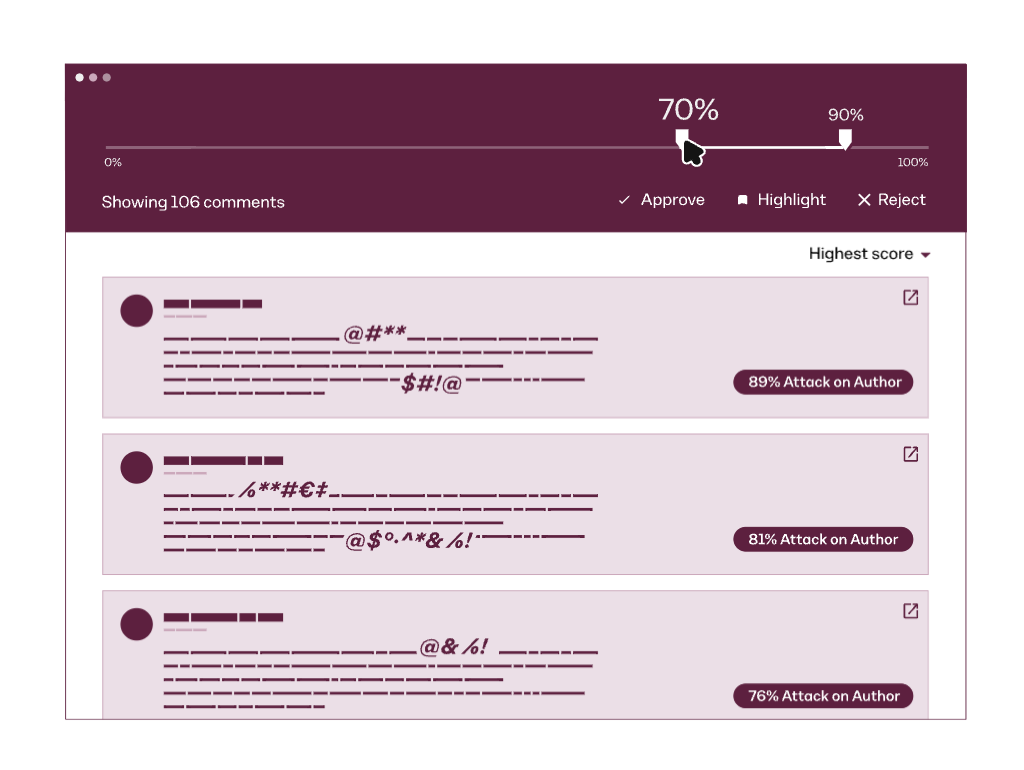
The New York Times knew that many readers of their publication found the comment section almost as valuable as the articles. However, they only had the ability to moderate comments for 10% of articles, forcing them to turn off the feature for the rest. I worked with Jigsaw, a subsidiary of Alphabet, to partner with the Times for a pilot program that would use AI to make moderation of comments much more efficient.
My role
Interviews with NY Times stakeholders
Product requirements and definition with Jigsaw engineers
UX design concepts for dashboard

Result
300% increase in the number of articles offering comments
The pilot program made the process of moderation so much more efficient that the New York Times opened 300% more stories for comments. The program has also been rolled out to other major content publishers such as the Wall Street Journal, OpenWeb, Reddit, Financial Times and many others.
UX Design
Balancing AI and human intervention
The site structure needed to work for a first-time visitor trying to understand Google's privacy philosophy and a power user looking for specific settings controls. I developed an architecture that focused on three core areas based on identified user intent: Google’s safety philosophy, benefits of safety features in specific products, and a central resource to find safety settings and controls.

User Testing
Finding the right workflow
Moderators were typically journalists early in their career, so increasing moderation speed and efficiency would not only help the New York Times maintain a vibrant community, but also allow our end users to focus on writing more stories. After studying their workflow it was clear that the best way to support them was to sort comments into batches based on perceived toxicity. Human intervention could then be focused on the gray areas where the AI couldn’t make a definitive decision.