Google Safety Center Redesign
Creating a centralized resource for Google’s digital safety information across the entire Google ecosystem of products.
Overview
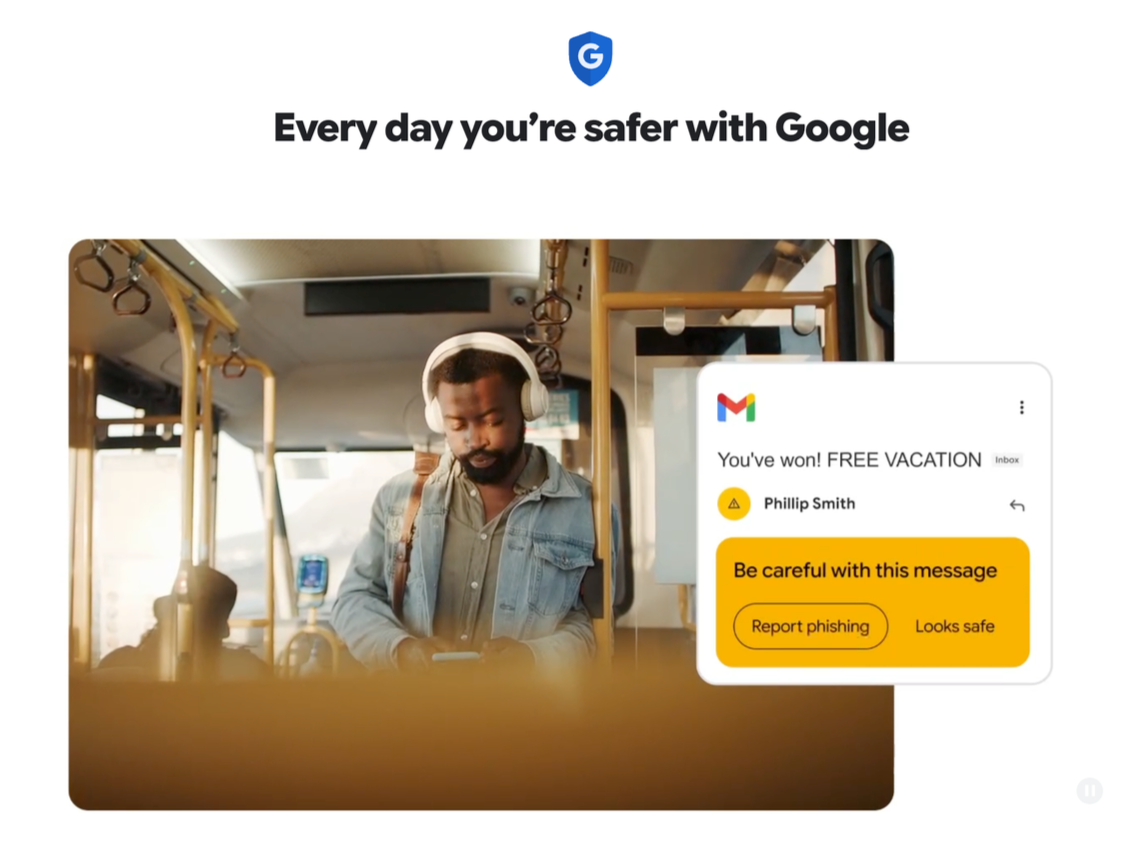
The project was focused on establishing a content and visual framework while centralizing the Google Safety resources. We developed a unified, benefit-driven asset and content framework to articulate the "Safer with Google" narrative across 16+ consumer-facing products. Then we created a centralized architecture that scales alongside an evolving digital safety landscape, replacing disparate product pages and help docs with a single source of truth.
My role
User Testing: Tested navigation structures and content clarity with real users to ensure findability and trust.
Content Design: Created standardized content templates, messaging, and frameworks to tell each product’s safety story clearly.
Visual Framework Concepts: Partnered with product marketers, Legal, and design teams to align stakeholders and produce content maps that guided visual execution.
Information Architecture: Built a scalable hierarchy, taxonomy, and navigation structure spanning 16+ products.
Cross-functional collaboration: Worked closely with multiple product owners, engineering, and legal teams to ensure the content was accurate and compliant.
Key Insight
“I’m not going to understand how it works. I just want to know how it helps me.”
Our research made it clear that users weren’t going to come to the site looking to understand how the technology works. They want to see tangible benefits, get reassurance that products are safe, and feel like they’re in control. This insight became the organizing principle for the site structure and content frameworks.
Information Architecture
Building a system that could scale
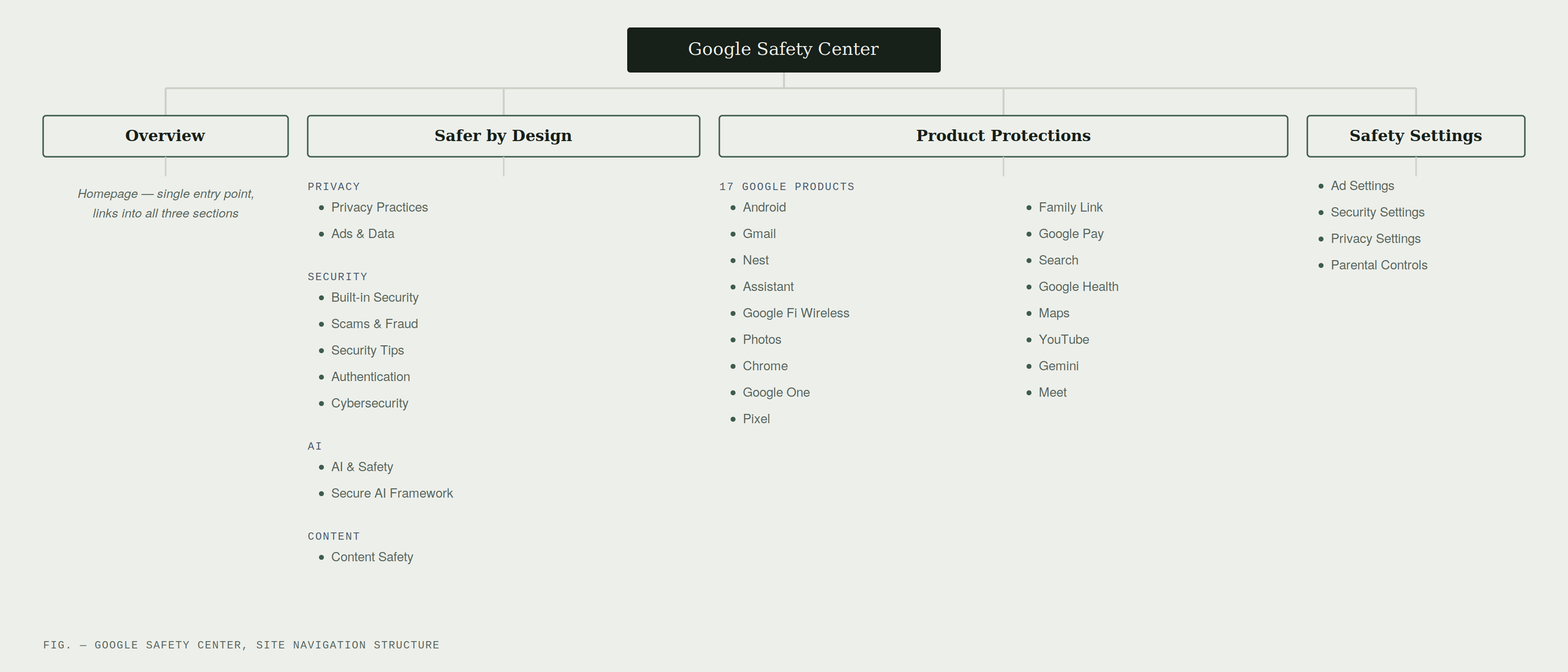
The site structure needed to work for a first-time visitor trying to understand Google's privacy philosophy and a power user looking for specific settings controls. I developed an architecture that focused on three core areas based on identified user intent: Google’s safety philosophy, benefits of safety features in specific products, and a central resource to find safety settings and controls.
Content Design
A content system that supported the brand and all products
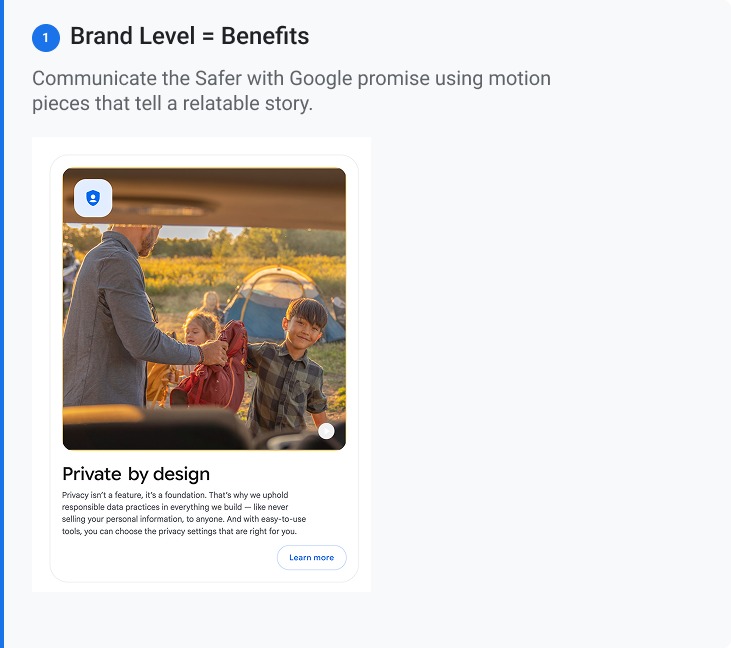
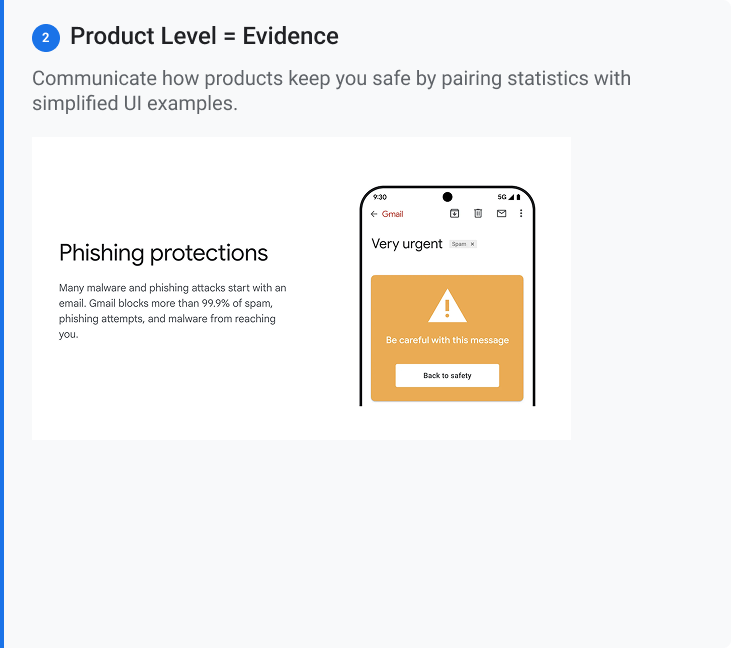
Every product marketer had a different view of what mattered most, and legal had constraints on what could be claimed. We developed a content structure that leveraged our insights, focusing on user benefits, reassurance, and controls within a scalable architecture based on where the user was in the journey.
Research & Validation
Learning what matters to the audience
I performed qualitative research to continuously evaluate creative concepts, taxonomy, and system architecture. This research-driven approach provided the proof points necessary to validate our content framework and guide cross-functional alignment across 16+ product teams.