Epic Games Achievements
Establishing global logic frameworks, XP formulas, and visual metadata standards for a cross-device ecosystem.
Overview
Google's safety and privacy information was scattered across dozens of product pages, help centers, and policy documents. AI had also created new challenges in keeping people safe, requiring a new communication strategy for talking about emerging threats.
My job was to build a new information architecture and content framework that created a unified resource spanning Google's entire product ecosystem, from Search and Gmail to Nest and YouTube.
My Role
Competitive Audit
User Interviews
Stakeholder Interviews
Logic Framework
Visual Asset Framework
Guiding Principles
Scale for a Global, Cross-Device Ecosystem
Anything we created needed to work for millions of global users on PC, mobile, and web.
Align with Intersecting Frameworks
Because parallel platform initiatives were in flight simultaneously, we continuously mapped dependencies to ensure our framework integrated with multiple product roadmaps.
Build on the Existing Foundation
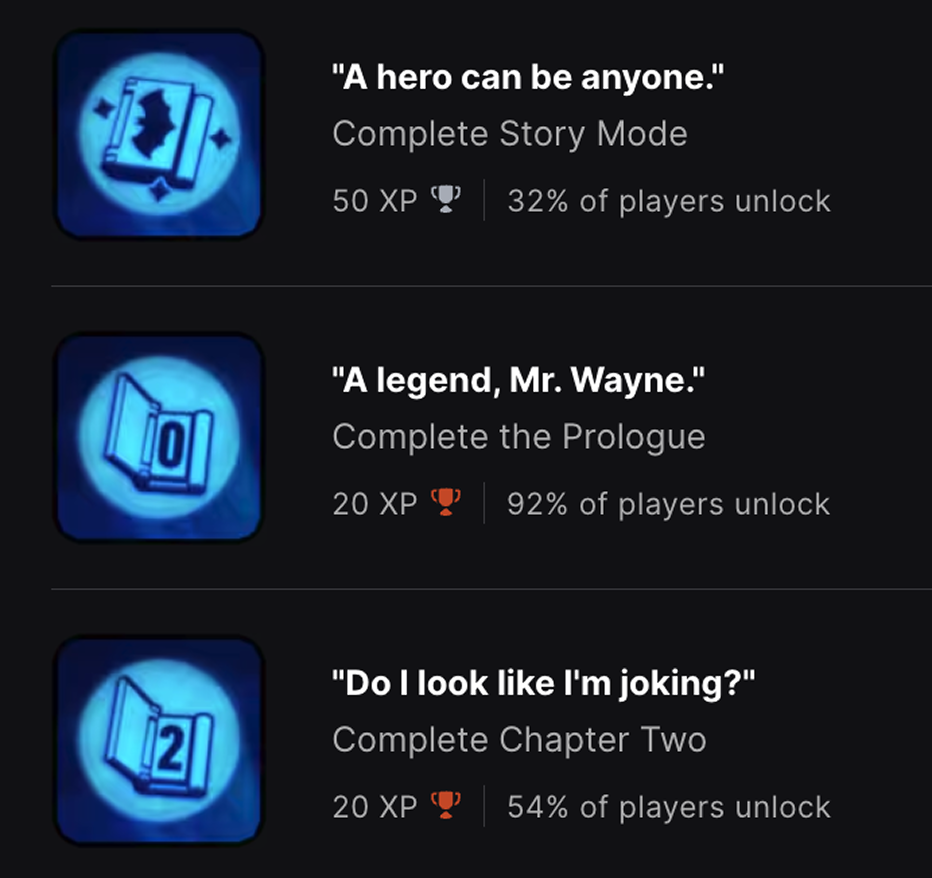
Epic Games already had game achievements created by developers for specific games. We audited and standardized the system to build a unified experience.
Platform Logic
Making the math work
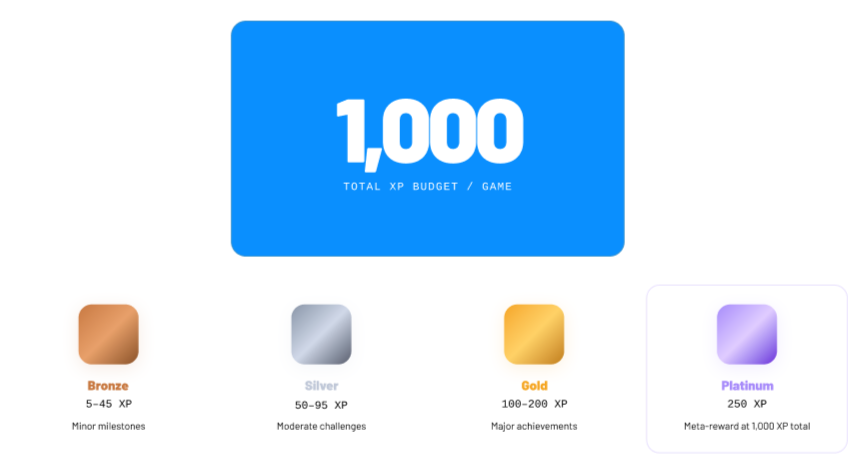
Every game with EGS achievements enabled must distribute exactly 1,000 XP across all mapped developer achievements. This created a standardized experience and prevented XP inflation across the system.
Platform Logic
Unifying developer and store achievements
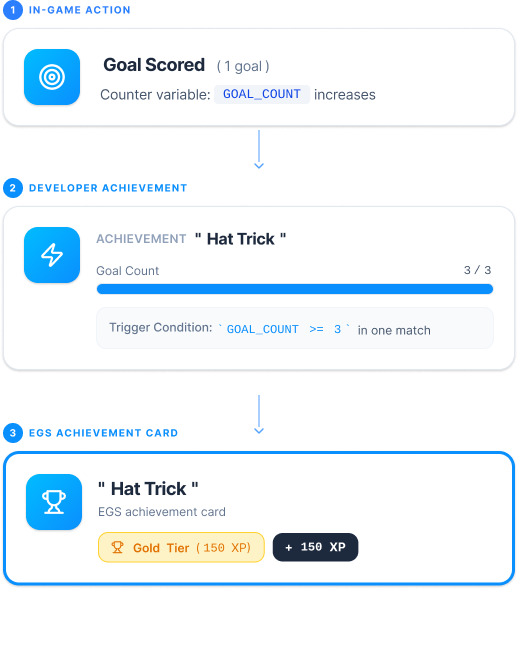
It was important not to create confusion with the developer achievements, so we architected a unified, complementary system. In-game actions map to platform-level triggers, creating a single progression that feels like an added "bonus" instead of a separate system.
Visual Framework
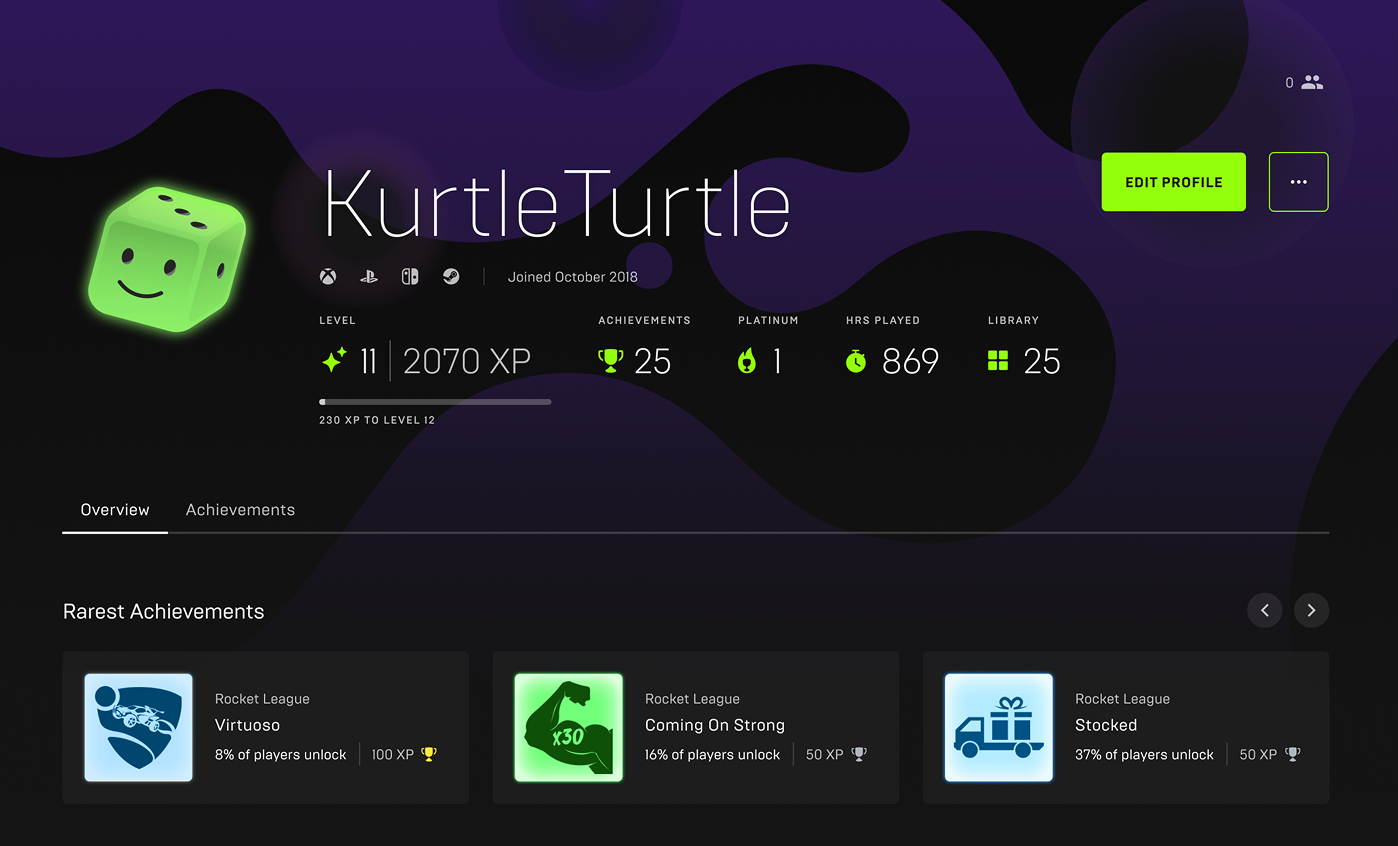
Give users a trophy case
Members made it clear that the profile is a place to show off their accomplishments. We used research to determine what’s most important to users. It was important to show platform-level progress while highlighting the rarest achievements across all games, then provide users a way to get more details around a specific game.
Visual Framework
Establishing visual hierarchy for assets
Member research helped us prioritize artwork and title, XP, trophy badge, and difficulty or rarity. We followed this insight, preventing visual clutter in a simple view.
This protected the creative integrity and unique art direction of individual game achievements, while acting as a lightweight, universal visual cue across the catalog.