Google Cloud Website Redesign
Rethinking the Google Cloud website through the lens of their audience and company business goals.
Overview
Google Cloud had a reputation in the market as not focusing on the business needs of their customers, and their website reflected that perception. They needed to better understand their audience and organize it to meet their needs while aligning with the evolving Google Cloud business goals. This was a massive undertaking for a site with thousands of pages of content.
My role
Managed a team of UX researchers, designers, and strategists
Designed and conducted qualitative audience research
Restructured Information Architecture with 10K+ pages
Delivered UX design concepts
Ran workshops with the large, cross-functional client team.
Key Insight
“Make it more technical.”
Qualitative research revealed that, contrary to prior assumptions, the majority of potential customers influencing cloud platform sales are highly technical and have a strong negative reaction to marketing jargon. This central insight guided the decision-making process when updating the content strategy, information architecture and design system for the website.
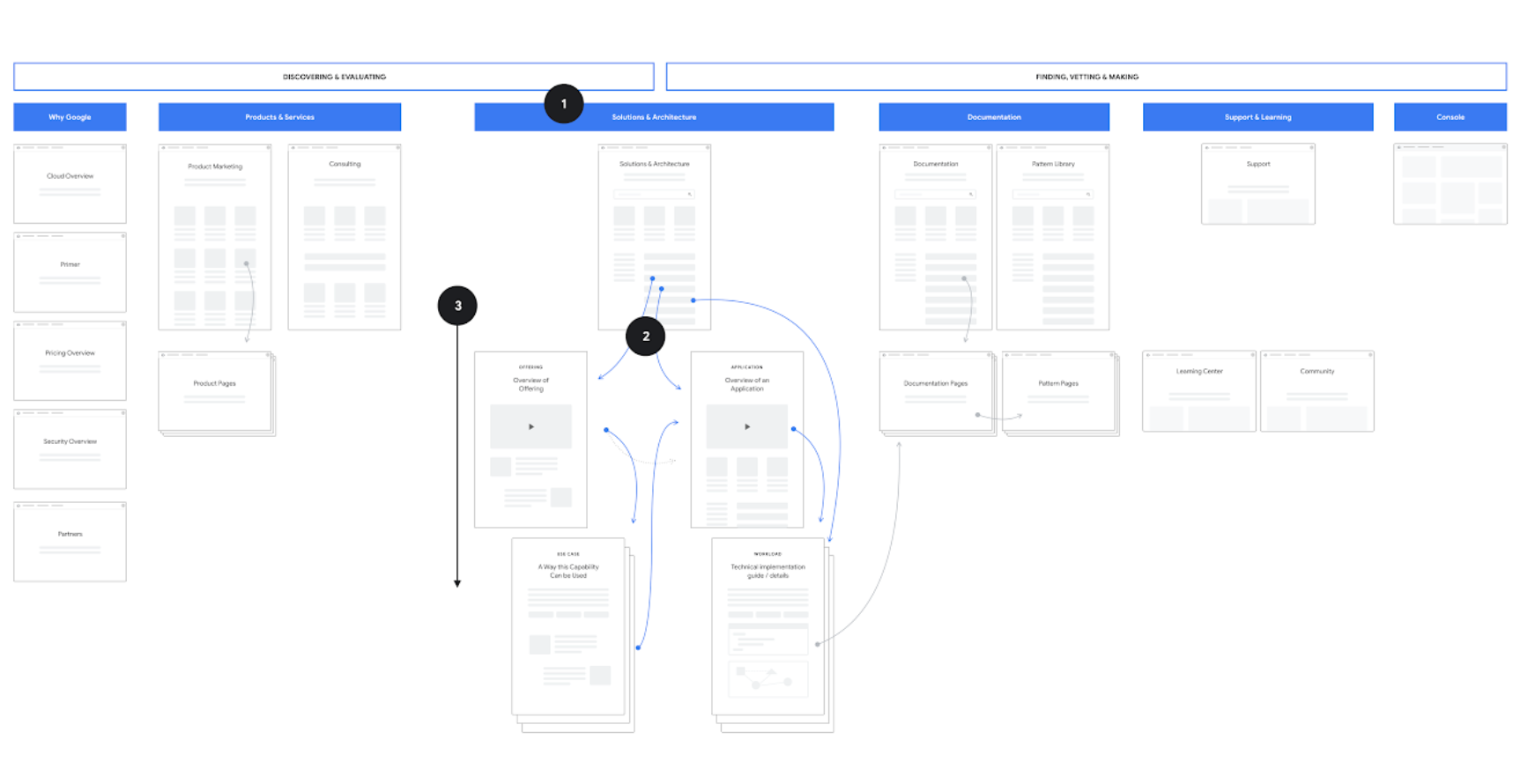
Content Strategy & Information Architecture
Elevate technical information
Users reacted very negatively to anything that felt like marketing, so we refocused the copy and structure of the site to bring technical information to the top of the site. We removed the superfluous marketing layer that was putting off our audience and elevated technical, industry, and solution-oriented content within the content hierarchy.
UX Design
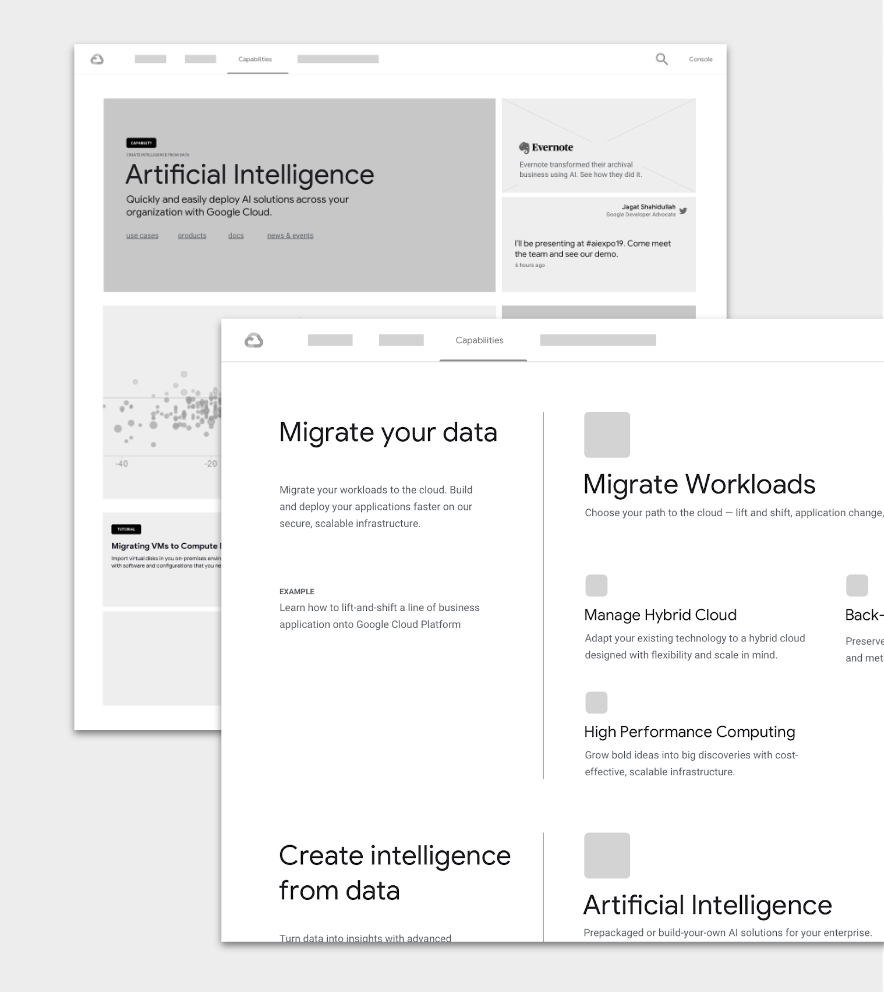
Finding new solutions
We identified the Solutions section of the site as the highest-priority areas of the site to redesign. These pages were central to connecting the C-Suite audience with metrics they want to see and guiding other technical audiences to concrete evidence of Google Cloud capabilities.
Audience
Mindsets, not personas
The extensive qualitative interviews conducted told a clear story of a broad range of audiences whose focus and needs changed throughout the day, making traditional personas cumbersome to use. Instead, we created six mindsets as a way to understand the needs of the audience at any given time. We mapped their needs and expectations and focused efforts where there was the most overlap.
