Yakima Racks
Mapping the end-to-end customer journey to unlock growth across physical and digital channels.
Project
Yakima had a strong brand with genuine soul — but that personality wasn't consistently showing up across the customer experience. From the moment someone first noticed a rack on a car at a trailhead to years into ownership, the journey was filled with friction, confusion, and missed opportunities to build loyalty.
To understand the full scope of the problem, I conducted customer interviews, in-store observations, and stakeholder sessions to map the complete purchase and ownership journey across physical and digital touchpoints. The result was a comprehensive service design framework that identified where customers were struggling, what questions they were asking at each stage, and where Yakima had the greatest opportunity to differentiate.
My role
Stakeholder interviews and workshops
Journey mapping across awareness, research, purchase, installation, and ownership phases
Friction point identification and opportunity prioritization
Cross-channel experience recommendations spanning digital, retail, packaging, and customer service
Key Insight
“Adding complexity to the process”
From the pre-purchase configurator to installation to contacting support, Yakima was adding complexity to purchasing and ownership of their product.
Research
Listening across the full journey
I conducted customer interviews and in-store observations to understand how people actually experienced the Yakima brand and what they felt and struggled with at each stage. I also engaged Yakima stakeholders to understand the business constraints and opportunities shaping the experience from the inside.
What emerged was a picture of a brand with tremendous goodwill but a customer experience that repeatedly undermined it. Customers loved the product once installed, but getting there was harder than it needed to be.
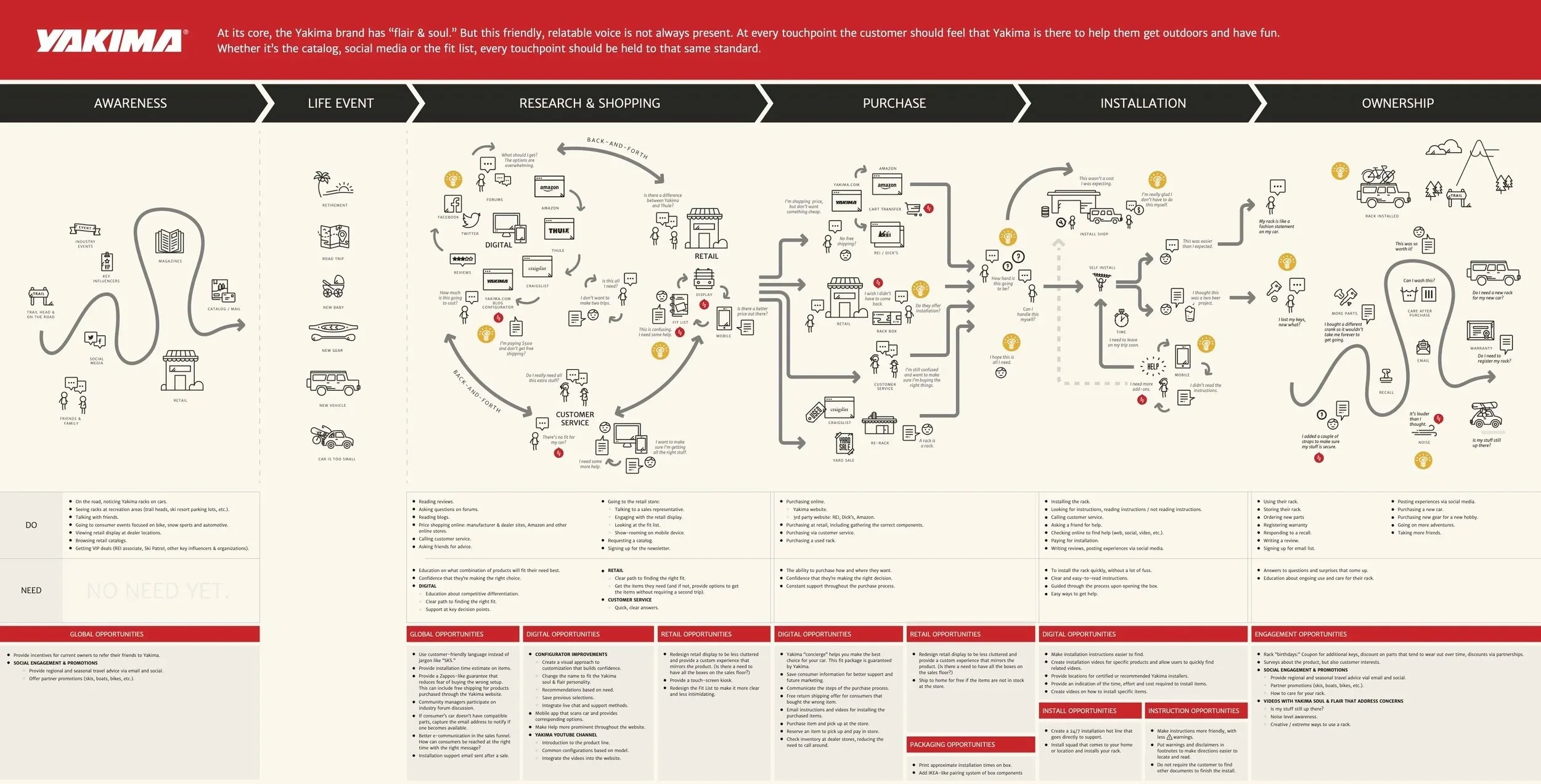
Journey Mapping
Six stages, dozens of moments that matter
The journey map organized the customer experience into six distinct phases: Awareness, Life Event, Research & Shopping, Purchase, Installation, and Ownership. Each phase surfaced its own set of customer needs, emotional states, friction points, and opportunity areas that spanned digital, retail, packaging, customer service, and post-purchase engagement.
Key friction points included:
An overwhelming configurator experience that eroded confidence at the critical decision moment
Inconsistent brand voice across touchpoints that undermined the "flair and soul" Yakima was known for
Installation instructions that created anxiety rather than confidence
A near-complete absence of support during the ownership phase, missing significant loyalty and advocacy opportunities